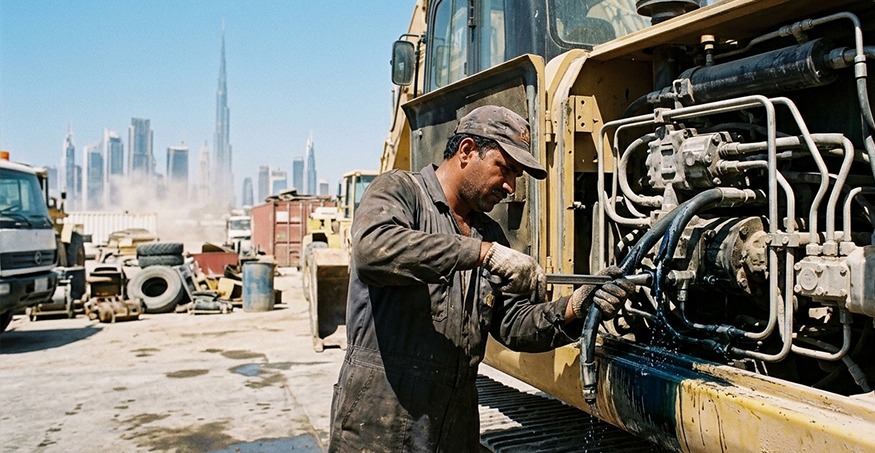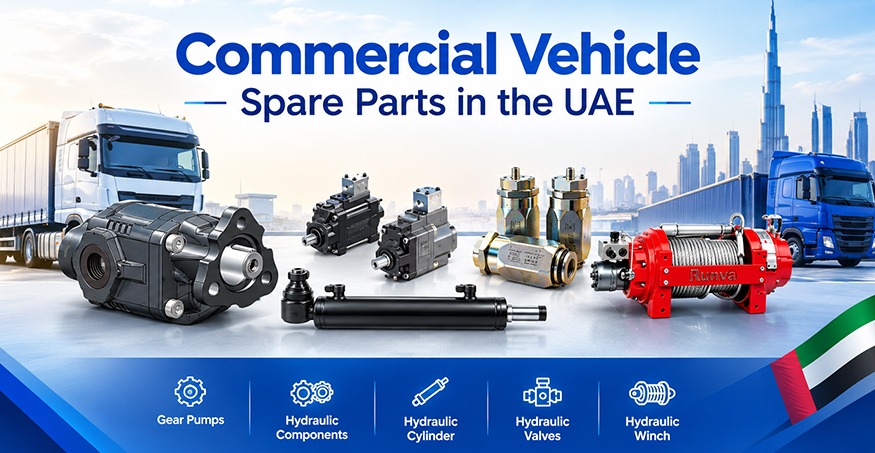
Commercial vehicles keep the UAE moving. Heavy trucks carry containers from Jebel Ali and Khalifa ports, tippers and mixers serve construction sites across Dubai and Abu Dhabi, buses transport workers and students every day, and delivery vans power the country’s fast-growing e-commerce sector. When one of these vehicles stops, so does the business behind it.
That is why access to reliable commercial vehicle spare parts in the UAE is so important. Every hour a truck sits idle waiting for a part means missed deliveries, delayed projects and lost income. For fleet owners, transport companies and workshop managers, finding the right part quickly, at the right price and with the right quality, can make a real difference to the bottom line.
This guide covers the UAE commercial vehicle parts market: why the country is a regional hub, which parts are in highest demand, how the climate affects wear and tear, the differences between genuine, OEM, aftermarket and used parts, and how to choose a supplier you can trust.
Why the UAE Is a Regional Hub for Commercial Vehicle Parts
The UAE has become one of the most important trading centres for truck, bus and heavy equipment parts in the Middle East and beyond. Several factors make it a natural hub.
- World-class ports and logistics. Major ports and free zones make it easy to import parts from Europe, Japan, China, Korea, India and the USA, and to re-export them across the region.
- A large, diverse fleet. Construction, logistics, oil and gas, tourism and public transport all depend on commercial vehicles from many different manufacturers.
- Re-export demand. Traders supply parts from the UAE to other GCC countries, East Africa, Central Asia and parts of South Asia.
- Established trading districts. Areas such as Sharjah’s industrial zones, Dubai’s Deira and Ras Al Khor, and Abu Dhabi’s Mussafah are known for concentrations of parts dealers and workshops.
- Fast delivery. With wide stock availability, many parts can be sourced the same day or within a few days, reducing vehicle downtime.
For buyers, this means more choice and competitive pricing. It also means more variation in quality, so knowing what to look for matters.
Common Commercial Vehicles on UAE Roads
The UAE fleet includes vehicles from European, Japanese, Korean, Chinese and Indian manufacturers. Each needs its own range of parts.
| Vehicle Category | Typical Uses | Common Makes |
|---|---|---|
| Heavy trucks and prime movers | Container haulage, long-distance freight | Mercedes-Benz, Volvo, Scania, MAN, Renault Trucks, DAF, Iveco |
| Medium and light trucks | City distribution, construction supply | Isuzu, Hino, Mitsubishi Fuso, Tata, Ashok Leyland, Eicher |
| Buses and coaches | Staff transport, school buses, tourism | Ashok Leyland, Tata, King Long, Yutong, Mercedes-Benz, Volvo |
| Vans and pickups | Last-mile delivery, trades, services | Toyota, Nissan, Mitsubishi, Ford, Hyundai |
| Construction and specialist vehicles | Tippers, mixers, cranes, tankers | Mercedes-Benz, MAN, Volvo, Sinotruk, Shacman |
Because fleets often mix several makes, many operators prefer suppliers that stock multiple brands. That way, one trusted source can cover most of their needs.
Most In-Demand Commercial Vehicle Spare Parts in the UAE
The UAE’s climate and operating conditions put heavy stress on commercial vehicles. Summer temperatures often climb above 45°C, fine sand and dust are everywhere, and many vehicles run long hours on highways or start and stop all day in city traffic. As a result, some parts wear out much faster than in milder climates.
Filters
Air, oil, fuel and cabin filters are among the fastest-moving parts. Dust and sand clog air filters quickly, so regular replacement protects the engine and keeps fuel consumption in check.
Cooling System Parts
Radiators, water pumps, thermostats, fan clutches, hoses and coolant tanks work hard in the heat. Cooling failures are a leading cause of breakdowns during summer.
Brake Components
Brake pads, shoes, drums, discs, air dryers, valves and brake chambers wear quickly under heavy loads and frequent stopping, especially for urban delivery and construction vehicles.
Suspension and Steering
Leaf springs, air bags, shock absorbers, bushings, kingpins, tie rods and steering boxes take a beating from heavy loads and rough site access roads.
Engine Parts
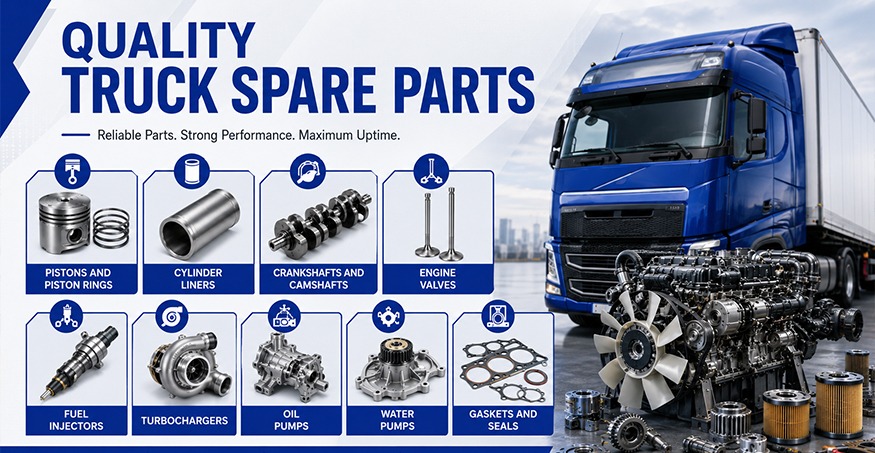
Pistons, liners, gaskets, injectors, turbochargers, belts and engine mounts are essential for keeping high-mileage engines running reliably.
Electrical Parts
Batteries, alternators, starters, sensors and lighting are affected by heat. Batteries in particular tend to have a shorter life in hot climates.
Transmission and Driveline
Clutch kits, gearbox parts, propeller shafts, universal joints and differential components are needed regularly for vehicles carrying heavy loads.
AC System Parts
Compressors, condensers, evaporators and blower motors keep drivers comfortable and alert, which is a safety issue as well as a comfort one.
Tyres and Wheel Components
Heat and long highway runs increase tyre wear. Wheel bearings, hubs and studs also need regular inspection.
Genuine, OEM, Aftermarket or Used: Which Parts Should You Buy?
Buyers in the UAE can choose from several grades of spare parts. Each has its place, depending on the vehicle, the part and the budget.
| Part Type | What It Is | Advantages | Considerations |
|---|---|---|---|
| Genuine | Supplied by the vehicle manufacturer in its own branded packaging | Exact fit, proven quality, protects warranty | Highest price, sometimes longer lead times |
| OEM | Made by the original component supplier, sold under its own brand | Same or similar quality to genuine, often lower price | Need to confirm correct part number and source |
| Aftermarket | Made by independent manufacturers to fit the vehicle | Wide choice and lower cost | Quality varies widely between brands |
| Used or reconditioned | Removed from other vehicles, sometimes refurbished | Lowest cost, useful for older vehicles | Unknown history, limited or no warranty |
Which to Choose
- Safety-critical parts such as brakes, steering and tyres deserve genuine, OEM or premium aftermarket quality.
- Vehicles under warranty should use genuine or approved parts to avoid warranty disputes.
- Routine service items like filters and belts can be good-value OEM or reputable aftermarket brands.
- Older vehicles nearing the end of their life may justify quality used or reconditioned parts for major components.
Beware of counterfeit parts
Fake parts copy the packaging and branding of well-known manufacturers but use poor materials. They can fail early and cause accidents or engine damage. Warning signs include prices far below the market, poor-quality packaging, spelling mistakes, missing part numbers and sellers who cannot provide invoices. Buying from established suppliers is the best protection.
How to Choose a Reliable Spare Parts Supplier in the UAE
With hundreds of traders across the Emirates, choosing the right supplier is as important as choosing the right part. Look for these qualities:
- Wide multi-brand stock. A supplier who carries parts for European, Japanese, Korean, Chinese and Indian vehicles can serve mixed fleets from one place.
- Correct part identification. Good suppliers use chassis (VIN) numbers and OEM part numbers to make sure you receive the exact part.
- Clear quality grades. They should tell you whether a part is genuine, OEM, aftermarket or used, and explain the difference in price and lifespan.
- Warranty and return policy. Reputable suppliers stand behind their parts and handle wrong or faulty items fairly.
- Proper documentation. VAT-compliant invoices, part details and, where applicable, certificates of origin.
- Fast availability and delivery. Same-day or next-day delivery within the UAE helps reduce downtime.
- Technical knowledge. Staff who understand trucks and buses can advise on alternatives and compatible parts.
- Fleet and bulk support. Account pricing, credit terms and scheduled supply for regular service items.
- Export capability. For buyers outside the UAE, experience with export documentation and shipping is essential.
- Good reputation. Check reviews, ask other fleet operators and look at how long the supplier has been trading.
Preventive Maintenance Tips for UAE Fleets
The cheapest spare part is the one you never need in an emergency. A strong preventive maintenance plan reduces breakdowns, extends vehicle life and keeps operating costs under control.
- Shorten filter intervals in dusty conditions. Air filters especially may need checking and replacement more often than standard schedules suggest.
- Prepare for summer. Inspect radiators, hoses, coolant levels, fan belts, AC systems and batteries before the hottest months.
- Check tyres regularly. Monitor pressure, tread and sidewall condition. Heat and under-inflation are a dangerous combination.
- Inspect brakes frequently. Heavy loads and city driving wear brakes quickly, so build checks into every service.
- Use the right fluids. Choose engine oil, coolant and transmission fluids suited to high temperatures and the manufacturer’s specifications.
- Keep fast-moving parts in stock. Fleets can hold a small inventory of filters, belts, brake pads and bulbs to avoid waiting for urgent orders.
- Track maintenance digitally. Fleet management software or simple service logs help you plan replacements before parts fail.
- Train drivers. Drivers who report warning lights, noises and leaks early help prevent small problems becoming major repairs.
- Wash vehicles regularly. Removing sand and dust from radiators, filters and moving parts reduces wear.
Frequently Asked Questions
Where can I buy commercial vehicle spare parts in the UAE?
Parts are available from authorised dealers, multi-brand parts distributors, specialist traders in industrial areas across Sharjah, Dubai and Abu Dhabi, and increasingly through online ordering. Choose suppliers with a clear reputation, proper invoices and warranty terms.
Are genuine parts always better than aftermarket parts?
Genuine parts guarantee fit and manufacturer quality, but they are not always the only good option. Premium OEM and reputable aftermarket brands can offer excellent value, especially for service items. For safety-critical parts, always choose proven quality.
How do I make sure I get the right part?
Share your vehicle’s chassis (VIN) number, model, year and engine type with your supplier, plus the old part number if available. This greatly reduces the risk of ordering the wrong item.
Can parts be exported from the UAE to other countries?
Yes. The UAE is a major re-export hub, and many suppliers ship parts across the GCC, Africa and Asia. Confirm shipping options, documentation and import rules in the destination country.
Why do some parts wear out faster in the UAE?
High temperatures, dust, sand and heavy loads put extra strain on filters, cooling systems, batteries, tyres and brakes. Adjusting service intervals to local conditions helps prevent premature failures.
Is it worth buying used truck parts?
Used or reconditioned parts can save money on major components for older vehicles. Buy from trusted sellers, check the condition carefully and ask about any warranty. Avoid used parts for brakes and steering.
Conclusion
Commercial vehicles are the backbone of the UAE economy, and dependable spare parts keep them on the road. With its strategic location, strong logistics network and wide range of suppliers, the UAE offers excellent access to parts for trucks, buses, vans and specialist vehicles from every major manufacturer.
To get the best value, match the part grade to the job, use chassis and part numbers to order accurately, watch for counterfeit products, and buy from suppliers who offer clear warranties and genuine expertise. Combined with a preventive maintenance plan built for the UAE’s heat and dust, the right parts strategy reduces downtime, controls costs and keeps your fleet working.