The Winch That Works When the Desert Doesn’t Cooperate
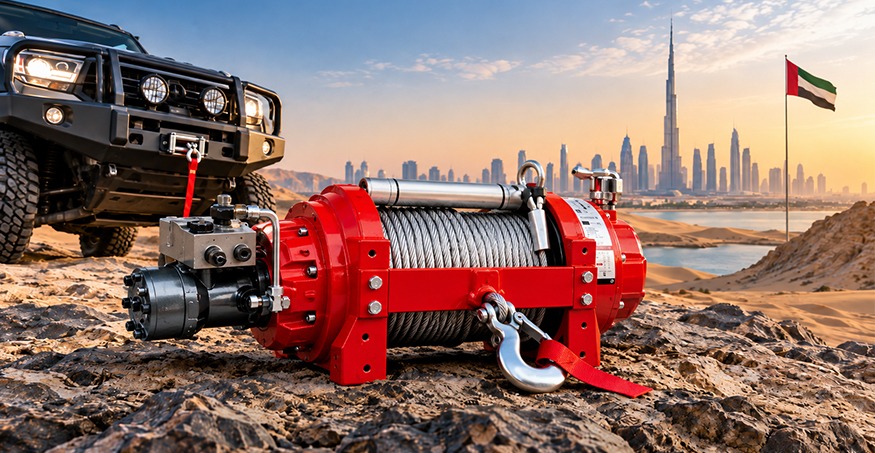
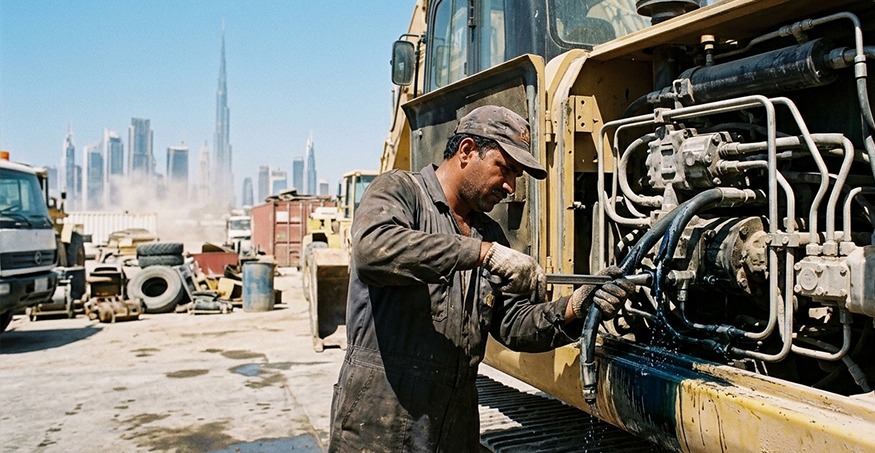
In the UAE, a winch is not an accessory. It is the tool that pulls a stranded trailer out of soft sand near Al Ain, loads a broken-down tipper onto a flatbed in Mussafah, and drags cargo up a ramp at Jebel Ali when the forklift can’t reach. When temperatures pass 45°C and fine dust gets into everything, the difference between a good winch and a cheap one shows up fast.
This guide is for fleet managers, recovery operators, body builders and procurement teams across Dubai, Abu Dhabi, Sharjah and the Northern Emirates who are searching for a hydraulic winch supplier in the UAE. It covers the main winch types, how to size one correctly, what to ask a supplier, and how to keep the winch running in Gulf conditions.
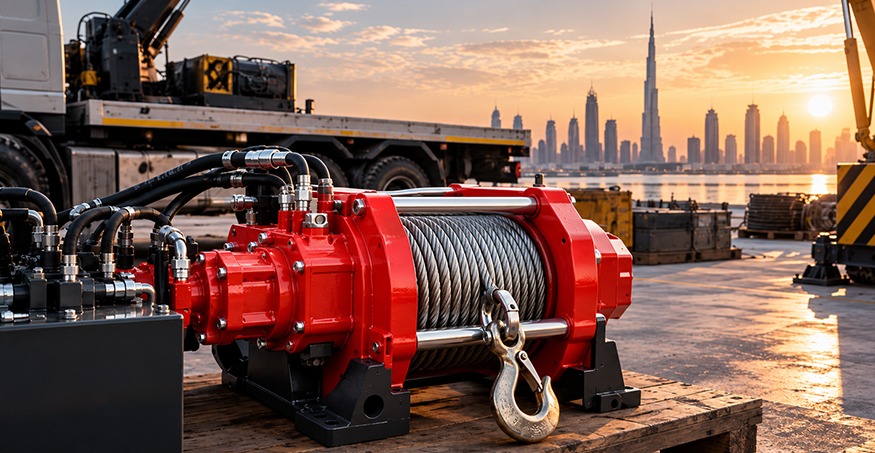
Quick answer: A hydraulic winch is the preferred choice for towing, recovery and heavy commercial vehicles in the UAE because it runs continuously from the truck’s hydraulic system or PTO without overheating, unlike most electric winches. Choose a winch rated at least 1.5 times the gross weight of the heaviest load you’ll pull, and buy from a UAE supplier that stocks spare parts, offers installation, and backs the product with a local warranty.
Why Hydraulic Winches Suit UAE Conditions Better Than Electric
Electric winches are common on 4x4s, but commercial operators in the UAE lean toward hydraulic for one main reason: heat. An electric motor pulling a heavy load builds heat quickly, and in summer ambient temperatures it hits its thermal limit even sooner. A hydraulic winch moves that work to the truck’s hydraulic pump, which is built for continuous duty.
| Factor | Hydraulic Winch | Electric Winch |
|---|---|---|
| Duty Cycle | Continuous, as long as the engine runs | Short pulls with cool-down breaks |
| Performance in 45°C+ Heat | Stable; oil cooling handles load | Motor overheating risk |
| Pulling Power | Suited to heavy and very heavy loads | Mostly light to medium loads |
| Dust and Water Resistance | Fewer electrical parts exposed | Motor and solenoids vulnerable to sand ingress |
| Power Source | PTO or engine-driven pump | Vehicle battery |
| Install Complexity | Needs hoses, valve and pump | Simpler wiring |
| Best For | Tow trucks, recovery, trailers, industrial trucks | Light vehicles, occasional use |
The trade-off is installation. A hydraulic winch needs a power take-off (PTO), pump, control valve and hoses. That’s why the supplier you choose matters as much as the winch itself.
Types of Hydraulic Winches and Where Each One Fits
One supplier may carry dozens of models, but most commercial buyers in the UAE need one of four types.
Towing Winch
A towing winch is mounted on wreckers, flatbeds and slide-bed recovery trucks. It pulls disabled vehicles onto the bed and recovers cars and vans from ditches, sand or soft shoulders. For towing companies on Sheikh Zayed Road, Emirates Road and E11, speed and smooth line control matter most. Look for free-spooling, a reliable automatic brake, and a rope length long enough for off-road recoveries.
Industrial Truck Winch
An industrial truck winch is built for repeated heavy pulls on job sites, in yards and in plants. It is common on utility trucks, crane trucks, oilfield service vehicles and construction support trucks. Operators in industrial zones such as Mussafah, ICAD and Jebel Ali use these for dragging equipment, positioning loads and pulling cable. Duty rating and gear durability are the key specs.
Commercial Vehicles Winch
A commercial vehicles winch covers the wide middle of the market: municipal trucks, delivery and logistics vehicles, rescue trucks, utility vans and specialised bodies. A good commercial vehicles winch balances pulling power, weight and mounting options so it fits the chassis without overloading the front axle. Fleet buyers often standardise on one model across many trucks to simplify spare parts and training.
Semi Trailer Winch
A semi trailer winch is mounted on lowbeds, flatbed semi trailers and equipment trailers. It loads non-running machinery, cargo containers and steel loads up the ramp and onto the deck. Hauliers moving equipment between the ports, free zones and project sites across the Emirates rely on it to load safely without a crane. Large drum capacity and strong brakes are essential because loads are heavy and ramps are steep.
| Winch Type | Typical Vehicle | Main Job | Key Spec to Check |
|---|---|---|---|
| Towing Winch | Wrecker, flatbed tow truck | Vehicle recovery and loading | Line speed, brake, free-spool |
| Industrial Truck Winch | Utility, crane and oilfield trucks | Repeated heavy pulls | Duty rating, gear type |
| Commercial Vehicles Winch | Municipal, rescue, logistics trucks | Mixed daily use | Weight, mounting fit |
| Semi Trailer Winch | Lowbed and flatbed semi trailers | Loading machinery and cargo | Drum capacity, rated pull |
How to Size and Specify a Hydraulic Winch
Most winch failures in the field come from undersizing. A winch’s rated pull is measured on the first layer of rope on the drum. Every extra layer reduces pulling power. Sand, slopes and mud then add resistance on top of the load’s weight.
Follow these steps before you request a quote:
- Find the heaviest load. Use the gross weight of the heaviest vehicle, machine or cargo you’ll pull.
- Add a safety margin. Multiply by at least 1.5. For desert recovery, steep trailer ramps or mud, many operators use 2.0.
- Check rope length and layers. Longer pulls mean more layers and less force. Ask the supplier for pull ratings per layer.
- Match your hydraulics. Confirm the pump’s flow (litres per minute) and pressure (bar) match the winch motor. Too little flow means slow line speed; too much pressure risks damage.
- Choose rope type. Steel wire rope suits abrasive and hot conditions. Synthetic rope is lighter and safer if it breaks, but needs protection from heat and sharp edges.
- Plan the mounting. Front bumper, behind the cab, or on a trailer deck all need a rated mounting plate and correct alignment.
- Confirm controls. Choose manual valve, cable, or wireless remote. Remote control helps on recoveries where the operator needs a clear view.
For example, a recovery truck that regularly pulls 10-tonne vehicles out of sand should look at a winch rated around 15 to 20 tonnes, not 10.
Winch Demand Across the Emirates: A Local Guide
The right winch depends on where your trucks work. Each emirate has its own mix of industries and terrain.
| Emirate | Key Hubs | Main Winch Demand |
|---|---|---|
| Dubai | Jebel Ali, JAFZA, Al Quoz, Ras Al Khor, Dubai Investments Park | Towing winches for city recovery; semi trailer winches for port and free zone logistics |
| Abu Dhabi | Mussafah, ICAD, KIZAD, Al Ain, Al Dhafra region | Industrial truck winches for oil, gas and construction; desert recovery |
| Sharjah | Sharjah Industrial Area, Hamriyah Free Zone, SAIF Zone | Commercial vehicles winches for workshops, body builders and fleets |
| Ajman & Umm Al Quwain | Ajman Industrial Area, UAQ Free Trade Zone | Towing and light commercial vehicle winches |
| Ras Al Khaimah | Al Hamra, RAK industrial zones, quarry areas | Heavy industrial truck winches for quarrying and mountain roads |
| Fujairah | Fujairah port, oil terminals, east coast highway | Semi trailer and recovery winches for port traffic and steep routes |
Dubai sees the highest volume of road recovery. Towing operators need fast, reliable towing winches that work in tight urban spaces and on major highways.
Abu Dhabi brings the heaviest pulls. Oil, gas, utilities and large construction projects create steady demand for industrial truck winches, often with long rope for open-desert work.
Sharjah and the Northern Emirates are home to many truck body builders and workshops. These buyers often need a commercial vehicles winch that fits many chassis types.
Ras Al Khaimah and Fujairah combine quarries, ports and mountain roads. Semi trailer winches and high-capacity recovery winches are common here because steep grades raise the load on every pull.
A supplier with stock in Dubai or Sharjah can usually deliver across all seven emirates within a day or two. Ask whether they also provide on-site installation or work with fitters near your depot.
How to Choose a Hydraulic Winch Supplier in the UAE
Price matters, but a winch that sits idle waiting for a part from overseas costs far more than the savings. Use this checklist when comparing suppliers.
- Local stock: Are common models and capacities in a UAE warehouse, or ordered on demand?
- Spare parts: Do they stock motors, brakes, valves, drums, wire rope and hooks locally?
- Technical support: Can an engineer help size the winch and match it to your PTO and pump?
- Installation: Do they install, or recommend trusted fitters in Dubai, Abu Dhabi or Sharjah?
- Certifications: Does the winch come with a load test certificate, rated-capacity documentation and a clear manufacturer origin?
- Warranty: Is the warranty honoured locally, and what does it cover?
- Range: Can they supply towing winches, industrial truck winches, commercial vehicles winches and semi trailer winches from one source?
- Heat and dust design: Are seals, paint and rope suited to Gulf heat, sand and coastal humidity?
- Delivery: Can they deliver to all seven emirates, and export to Oman, Saudi Arabia or the wider GCC if needed?
- References: Can they name recovery companies, fleets or body builders they already supply?
A supplier that ticks most of these boxes is a partner, not just a seller. That matters most when a recovery truck is off the road and every hour costs money.
Maintenance for Desert and Coastal Duty
Heat, sand and salt air shorten the life of any winch. A simple routine keeps a hydraulic winch reliable for years.
| How often | What to check |
|---|---|
| Before each job | Rope for kinks, broken strands or fraying; hook and latch; hose condition |
| Weekly | Wipe dust from the drum, motor and valve; check for oil leaks at fittings |
| Monthly | Hydraulic oil level and colour; mounting bolts torque; brake function under light load |
| Every 6 months | Change hydraulic filters; inspect gearbox oil; respool rope evenly under tension |
| Yearly | Full inspection and load test by a qualified technician |
In summer, use hydraulic oil suited to high operating temperatures, and check it more often. Sand works into seals and fittings, so keep dust caps on couplings when they’re disconnected. Trucks based near the coast in Dubai Marina, Abu Dhabi Corniche or Fujairah should be washed down with fresh water regularly to stop salt corrosion on the drum and frame.
Frequently Asked Questions
What is the best winch for a tow truck in the UAE?
A hydraulic towing winch with free-spool, an automatic load-holding brake and steel wire rope. It handles repeated recoveries in summer heat without overheating.
What size hydraulic winch do I need?
Take the heaviest load you’ll pull and multiply it by 1.5. Use 2.0 for desert sand, mud or steep trailer ramps.
Can I fit a hydraulic winch on any commercial vehicle?
Most trucks can take one, but the vehicle needs a PTO or engine-driven hydraulic pump and a suitable mounting point. A supplier can check compatibility with your chassis model.
What is a semi trailer winch used for?
It pulls non-running equipment, machinery or heavy cargo up the ramp and onto a lowbed or flatbed semi trailer, so you can load without a crane.
Is an industrial truck winch different from a towing winch?
Yes. An industrial truck winch is built for frequent heavy pulls on job sites. A towing winch is tuned for vehicle recovery, with faster line speed and free-spooling.
Hydraulic or electric winch for the UAE?
Hydraulic for commercial and heavy use, because it can run continuously in high heat. Electric suits light vehicles and occasional use.
Where can I buy a hydraulic winch in Dubai or Abu Dhabi?
Look for a UAE supplier with local stock, spare parts and installation support, ideally with warehouses near Dubai or Sharjah industrial areas and delivery to Mussafah, ICAD and the Northern Emirates.
Do suppliers in the UAE deliver across the GCC?
Many do. Ask about export documentation and delivery times for Oman, Saudi Arabia, Qatar, Bahrain and Kuwait.
Pull With Confidence
The right hydraulic winch keeps recovery trucks earning, trailers loading and job sites moving, even in the hottest months. Size it with a real safety margin, match it to your hydraulics, and buy from a UAE supplier who can install it, service it and get you parts quickly. That’s how a winch becomes a long-term asset instead of a recurring problem.
Key facts at a glance
- Products: Hydraulic towing winch, industrial truck winch, commercial vehicles winch and semi trailer winch.
- Service area: Dubai, Abu Dhabi, Sharjah, Ajman, Umm Al Quwain, Ras Al Khaimah and Fujairah, with GCC export.
- Key industrial hubs: Jebel Ali, Al Quoz, Mussafah, ICAD, KIZAD, Sharjah Industrial Area, Hamriyah and RAK industrial zones.
- Why hydraulic: Continuous duty in 45°C+ heat, high pulling power, fewer exposed electrical parts.
- Sizing rule: Rated pull of at least 1.5 times the heaviest load; 2.0 for sand, mud or steep ramps.
- Supplier must-haves: Local stock, spare parts, technical sizing support, installation and a local warranty.
- Maintenance: Daily rope checks, monthly oil and brake checks, annual load test.