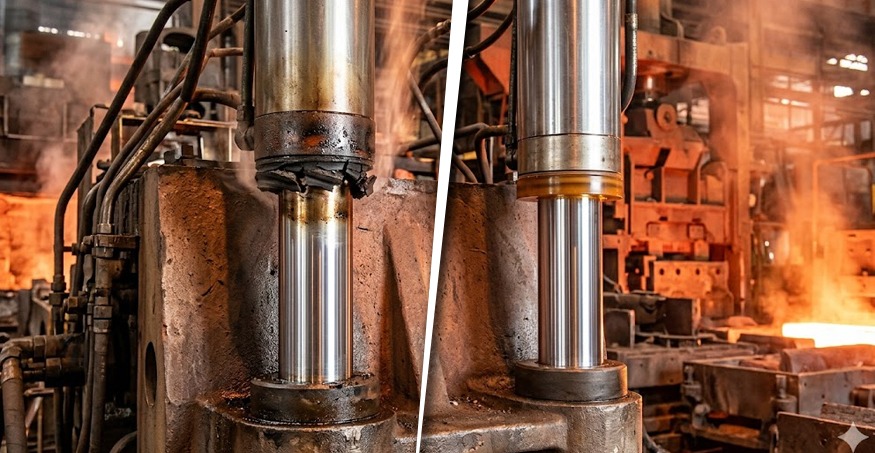
In the middle of a busy workshop, repeated hydraulic failures started slowing everything down. Machines lost pressure, seals cracked under heat, and unexpected downtime disrupted the entire workflow. That’s where the real debate around Hydraulic Cylinder Seal Kits begins: Rubber vs. Polyurethane Seals.
Some technicians still trust Nitrile Rubber Seals for their flexibility, while others prefer Polyurethane Hydraulic Seals for their toughness and durability. But when temperatures rise, the choice of High-Temperature Hydraulic Seals can mean the difference between smooth performance and costly breakdowns. The big question is Hydraulic Seal Kit Longevity: which material truly lasts longer in demanding conditions? Let’s break down the real Polyurethane vs. Rubber Seals Heat Resistance battle and discover the Best Seals for Hot Hydraulic Systems.
Key Properties of Rubber Seals
Rubber seals, especially Nitrile Rubber Seals, have long been trusted in Hydraulic Cylinder Seal Kits due to their flexibility and affordability. In moderate conditions, Rubber vs. Polyurethane Seals often comes down to softness and sealing efficiency. Rubber handles vibration well and offers good compatibility with oils, making it suitable for general Hydraulic Seal Replacement Kit use. However, in extreme heat, its Hydraulic Seal Kit Longevity can decrease as it hardens or degrades faster than advanced alternatives in heavy-duty hydraulics.
Advantages of Polyurethane Seals
Polyurethane Hydraulic Seals are known for toughness and wear resistance, making them ideal for High-Temperature Hydraulic Seals applications. In demanding Hydraulic Cylinder Seal Kits, they outperform rubber in pressure handling and abrasion resistance. Their tight sealing improves efficiency and reduces leakage, which boosts Hydraulic Seal Kit Longevity. For operators seeking the Best Seals for Hot Hydraulic Systems, polyurethane offers a balanced mix of durability and heat stability in industrial environments.
Head-to-Head Comparison in High-Heat Applications
In high-heat industrial settings, Polyurethane vs. Rubber Seals Heat Resistance becomes the deciding factor. Rubber offers flexibility but loses integrity faster under extreme temperatures, while polyurethane maintains structure and sealing strength. For Hydraulic Seal Replacement Kit users, polyurethane provides fewer replacements and improved efficiency. Rubber may still suit low-pressure systems, but polyurethane dominates Heavy-Duty Hydraulic Cylinder Seals where heat, pressure, and abrasion combine, making long-term performance and Hydraulic Seal Kit Longevity more reliable.
Factors to Consider
- Operating Temperature:
High-temperature hydraulic seals perform differently; rubber softens and degrades faster, while polyurethane hydraulic seals maintain stability, making them ideal for hot hydraulic systems and heavy-duty applications. - Abrasion and Pressure:
Polyurethane seals resist wear and high pressure better than rubber, making Hydraulic Cylinder Seal Kits more durable in heavy-duty hydraulic systems under continuous stress. - Cost vs. Longevity:
Rubber seals are cheaper initially, but polyurethane offers a longer service life, reducing Hydraulic Seal Replacement Kit frequency and improving overall Hydraulic Seal Kit Longevity. - Fluid Compatibility:
Nitrile Rubber Seals handle oils well, while Polyurethane Hydraulic Seals offer broader chemical resistance, ensuring reliable performance in Heavy-Duty Hydraulic Cylinder Seal Kits applications.
Conclusion: Choosing the Right Seal for Long-Term Hydraulic Performance
Choosing between Rubber vs. Polyurethane Seals depends on operating heat, pressure, and system demands. In modern Hydraulic Cylinder Seal Kits, polyurethane leads in durability, especially for High-Temperature Hydraulic Seals and heavy-duty systems. Rubber still works for cost-sensitive setups. For long-term Hydraulic Seal Kit Longevity and reduced Hydraulic Seal Replacement Kit needs, polyurethane remains the preferred solution in demanding industrial applications.
FAQs: Rubber vs. Polyurethane Hydraulic Seal Kits Explained
1. Can polyurethane hydraulic seals handle higher temperatures than rubber in hydraulic cylinders?
Yes, polyurethane hydraulic seals generally withstand higher temperatures than rubber seals. They maintain shape and sealing efficiency under heat, making them ideal for High-Temperature Hydraulic Seals applications in demanding hydraulic cylinder environments where rubber may degrade faster.
2. Are polyurethane hydraulic seal kits more expensive than rubber ones?
Yes, polyurethane hydraulic seal kits usually cost more than rubber ones due to their durability and performance. However, they provide better Hydraulic Seal Kit Longevity, reducing replacement frequency and long-term maintenance costs significantly.
3. When should I choose rubber seals over polyurethane for my hydraulic system?
Rubber seals, especially Nitrile Rubber Seals, are best chosen for low-pressure, cost-sensitive systems where flexibility matters more than heat resistance. They work well in moderate temperatures and less demanding hydraulic applications.